The rise, fall and rise of Bitcoin
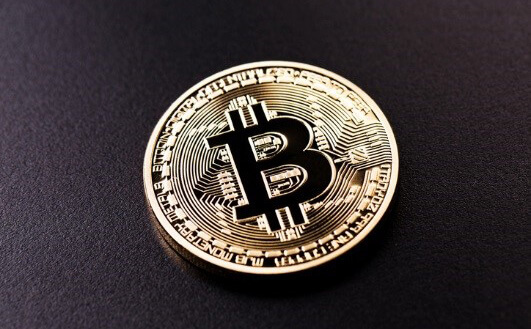
Bitcoin’s journey is the stuff of legend. From complete obscurity 10 years ago, to, in 2017, price parity with gold via a series of collapses, large-scale theft and a very famous pizza purchase.
Today, after nearly a decade of tumultuous growth, it is recognised as a mainstream currency. Central banks acknowledge it could be the future of money, FX markets trade in it. Retailers allow customers to buy in bitcoin and individuals across the world are transacting and investing.
For the uninitiated, bitcoin is a cryptocurrency, essentially money that only exists in the digital space as there is no physical equivalent unlike pounds, dollars and euros. This, and its relationship to the blockchain security protocol, makes it extremely secure at a basic level.
The blockchain cannot be hacked and, so far, frauds involving bitcoin have taken place through software layered on top, not by compromise the blockchain itself.
Michael James, head of technical architecture at Altus Consulting, explains: “Blockchain is a shared ledger that records and validates the sequence of transactions. It’s unique ‘use case’ feature is that the ledger can be copied to hundreds of thousands of computers.
“Anyone can add new transactions at any time, and everyone can agree the sequence and value of each transaction. The most important security feature is that it is based on cryptographic encryption and has so far proved impossible to hack.”
Bitcoin was not the first idea to harness the power of the blockchain, but it is the most famous and successful. This, despite a dispute over how it was created and who can rightly claim to be the founder.
Just how did we get here? The history of the world’s most famous cryptocurrency is shaped by a number of important dates. Here we chart the events that created a financial phenomenon:
August 2008
Charlies Bry, Neal Kin and Vladimir Oksman file an encryption patent application in the US. The same month they register the Bitcoin.org web url.
October 2008
An enigmatic individual (or individuals) calling himself (or themselves) Satoshi Nakamoto publishes a nine-page white paper called “Bitcoin: A peer-to-peer electronic cash system”. It outlined, for the first time, a blueprint for a digital distributed money platform.
Nakamoto’s blueprint demonstrated how the system could be protected from copies, thereby giving it scope to develop into a mainstream currency without criminal interference.
In his introduction, Nakamoto described the system in the following terms:
A purely peer-to-peer version of electronic cash would allow online payments to be sent directly from one party to another without going through a financial institution.
Digital signatures provide part of the solution, but the main benefits are lost if a trusted third party is still required to prevent double-spending.
We propose a solution to the double-spending problem using a peer-to-peer network. The network timestamps transactions by hashing them into an ongoing chain of hash-based proof-of-work, forming a record that cannot be changed without redoing the proof-of-work.
The longest chain not only serves as proof of the sequence of events witnessed, but proof that it came from the largest pool of CPU power. As long as a majority of CPU power is controlled by nodes that are not cooperating to attack the network, they’ll generate the longest chain and outpace attackers.
The network itself requires minimal structure. Messages are broadcast on a best effort basis, and nodes can leave and rejoin the network at will, accepting the longest proof-of-work chain as proof of what happened while they were gone.
January – October 2009
Bitcoin becomes real with the launch of the first open source bitcoin client and release of bitcoins. Nakamoto is credited with ‘mining’ the first 50 bitcoins. The first transaction involving the currency also happens later in the month.
In October, bitcoin is valued against traditional currencies. Its initial value is just over 1.3 bitcoins to the dollar.
May 2010
Despite this valuation, bitcoins remained to all intents and purposes valueless. A major vulnerability in the currency discovered in August 2010, showed that it wasn’t developed enough to be traded with confidence.
Yet, in May, the first proper bitcoin transaction happened. Florida-based programmer Laslo Hanyecz offered 10,000 BTC to whoever would buy him two pizzas from Papa Johns. Someone in Britain volunteered.
At time of writing that amount of coin is valued at just over $23.5 million, or nearly $12 million per pizza and a tasty $1 million per slice. The event, which happened on 22 May, is now celebrated across the bitcoin community as “Bitcoin Pizza Day”.
February – June 2011
Bitcoin’s steadily increasing value suddenly explodes. In February, it achieves parity with the dollar, but by June the coin is worth £31 a pop. Around this time, bitcoin’s total market cap hits $200 million.
In April, Satoshi Nakamoto disappears off the bitcoin radar. No one ever reported seeing or hearing from this elusive character because ‘his’ communications only ever happened via email and chat rooms. But in a final communication he left Gavin Anderson in charge of the project as lead developer.
2013

Bitcoin enjoys a wave of global publicity via newspapers, magazines, websites and TV; but at the same time its legitimacy is being tested.
First, by the growth of illicit ecommerce website The Silk Road, which used bitcoin to cloak criminal transactions involving weapons and drugs. Secondly, by a serious theft of $375,000-worth from a digital wallet owned by a Bitcoin forum founder known as allinvain.
Even so, the currency’s value soars to more than $700 by the end of the year, with investors easily netting 1,000% returns and more.
2014
Bitcoin hits the mainstream with several major developments. Among them, gaming company Zenga begins permitting in-game purchases using the currency, while Las Vegas casinos also agreed to accept it for bets.
In June, the St Petersburg Bowl in Florida agreed a two-year sponsorship deal with BitPay, a bitcoin service provider. The following month Dell became the next big name to start accepting the currency, joined by Microsoft’s Xbox in December.
2015
Two big money venture capital deals at the beginning of the year provide more evidence of the bitcoin opportunity. In January, Coinbase raised $75m; a figure topped in march with a $116 million funding round by 21 Inc.
In August, with 160,000 merchants now accepting bitcoin, Barclays became the first high street bank to jump on-board, allowing users to make charitable donations in the currency.
2016 and beyond
Bitcoin becomes further entrenched in mainstream finance, but vulnerabilities remain. The Bank of Japan and games download site Steam both began transacting in the coin, but in August another high-profile heist costs exchange Bitfinex a reported $60 million.
In the first part of 2017, bitcoin’s value continued to grow. Today, one bitcoin is worth more than an ounce of gold. In July, a single bitcoin became worth 2,282 US dollars, making the pizza’s purchased in 2010 look extremely poor value for money.
There are more than 10,000 projects related to bitcoin on the Github platform, making it one of the busiest areas of tech development in the world. And, with ever greater numbers of institutions warming to the currency, its future looks bright.
How is bitcoin impacting online gaming?